Can You Really Change the World Starting With One Choice?
The world feels broken, but what if the solution isn’t out there—it’s within you? Every thought, every reaction, every choice shapes…


What’s important to appreciate about resistance is that it is often not intentional but the result of what’s going on in the more subtle, hidden parts of your unconscious mind. Most people I meet are usually aware of the surface-level results of resistance, but they live unaware of the underlying reasons as to why they resist and end up feeling the way they do.

Even if we escaped getting sick from the coronavirus, we are all sick of staying at home, practicing social distancing and wearing masks.
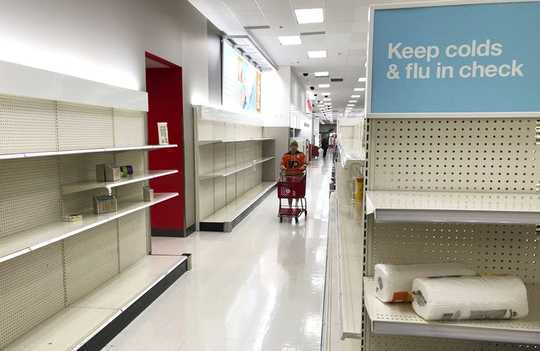
The media is replete with COVID-19 stories about people clearing supermarket shelves – and the backlash against them.

Have you noticed grabbing an extra bag of chips at the supermarket? Or eating more frozen dinners than you used to? Or even eating snacks that you haven’t eaten since you were a little kid?
Consider the following brain teaser: A bat and a ball cost $1.10 in total. The bat costs $1.00 more than the ball. How much does the ball cost?

The effects of the coronavirus pandemic will be “imprinted on the personality of our nation for a very long time,” predicted Anthony Fauci, director of the National Institute of Allergy and Infectious Diseases.

This is a confusing and, frankly, scary time for a lot of us. There’s so much contradictory information, and the “right” thing to do yesterday is now the “wrong” thing to do today.

Social distancing is both necessary and hard. If my Facebook news feed and anecdotal experience in my own family are at all representative of larger trends, adolescents are especially feeling the pain.

The Dalai Lama caused quite a stir at the 2009 Peace Summit in Vancouver. He said that “the world would be saved by Western women.” His statement received a range of responses, but many women found it empowering, and it catalyzed women-focused initiatives.
During one of my daily walks with my toddler, when we passed his favorite playground, I noticed a new sign warning that the coronavirus survives on all kinds of surfaces and that we should no longer use the playground.

Certain traits of little kids’ play could signal future aggressive and antisocial behavior, researchers report.

With the coronavirus pandemic quickly spreading, U.S. health officials have changed their advice on face masks and now recommend people wear cloth masks in public areas where social distancing can be difficult, such as grocery stores.

Even in normal circumstances, it can be hard to get motivated to do your schoolwork. But these are not normal circumstances.
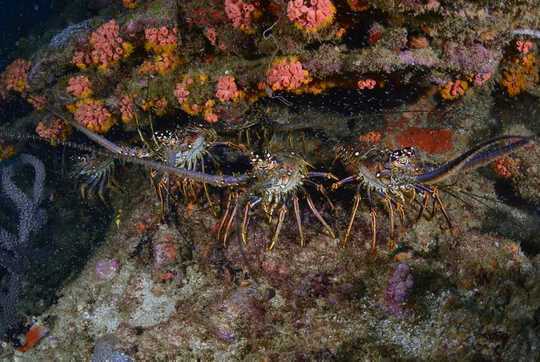
Social distancing to combat COVID-19 is profoundly impacting society, leaving many people wondering whether it will actually work. As disease ecologists, we know that nature has an answer.

In these difficult times, it’s not surprising some people are looking to alcohol for a little stress reduction. But there are healthier ways of coping with the challenges we currently face.

Responding to the coronavirus pandemic, most American universities have suspended all campus activities. Like millions of people all around the world, the lives of students all over the U.S. has changed overnight.

So, who knows exactly what's going on right now? I've reviewed videos, read blogs and articles and books, accessed a variety of news sources, mainstream and sidestream, watched YouTube videos of doctors and economists, listened to informed and anxious friends, and I'm no closer to knowing for sure than before.

Thinking under extreme time pressure is not optimal, but it is inevitable that we will find ourselves in this situation at times. It is always best not to rush and get seduced by mental shortcuts. Use all the time available to you in making a decision.

People who are starved for love go out and try to get attention! Now some people may do that by becoming prominent in a constructive way by being in theater, media, or the top in their field. Others choose another route.
I once worked for a rather abusive woman who constantly berated, belittled and badgered her employees -- me included. If any of us sought to stand up for ourselves, we were chastised and told in no uncertain terms that we were insecure whiners who should appreciate we had a job in the first place.
Health care professionals keep say to avoid touching your face as protection from COVID-19, but it’s a lot easier said than done.

The other day I went into Costco to buy some toilet paper. It came as a small shock when I couldn’t find a single roll.

At one time or another, just about every parent uses food to reward their kids for good behavior and achievements – or to console them when they’re sad or disappointed.